The television industry has been speaking two conflicting languages—linear and streaming—when buying ads on the same smart TV screen. That confusion, which Omdia says leaves more than a third of streaming ad inventory unsold, may finally have a translator. V, the operating system for the home, unveiled three interconnected advances at the DisrupTV Executive Summit that together form a single measurement and pricing framework for the smart TV era—and the company is giving it away to competitors for free.

Guy Edri, CEO of V, presented the new measurement methodology at the DisrupTV Executive Summit, an event that drew top industry executives and leading experts from around the globe. The summit served as the stage for what V calls a long-overdue update to how television advertising is bought, sold, and valued.

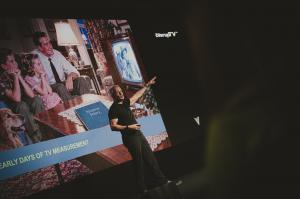
Alan Wolk spoke about the history of TV measurement at the DisrupTV event in London, providing context for why the old models no longer fit. Historically, every era of television has had its own currency: Gross and targeted rating points (GRP and TRP) were invented for linear TV, and the industry adopted them universally. Cost per thousand (CPM) was created for the web, and that, too, became a global standard. But the smart TV is now the main screen in the home, and advertisers are still buying that same screen with two different languages—one for linear and one for streaming. Neither metric was designed for a shared screen in a real room, and the result, V argues, is a broken model that serves no one well.
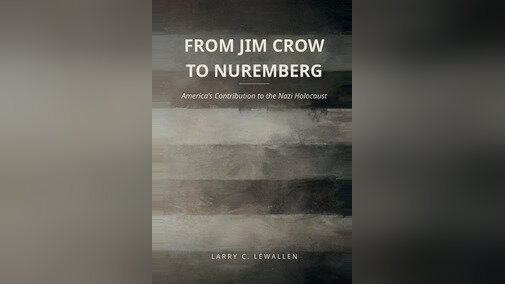
Also worth a look: Larry Lewallen’s new book traces how Jim Crow laws directly inspired Nazi racial policy and Talya Rotbart turns a real Italian park into a treasure-hunting children’s fable about what money can’t buy.
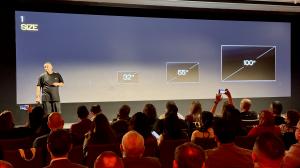
Guy Edri presented the implementation of the new measurement system, which incorporates the size of the screen as its foundational unit. According to Omdia, more than a third of streaming ads available on TV sets typically go unsold, a gap the research firm attributes to measurement gaps and trust concerns rather than an oversupply of inventory.
The smart TV is now the main screen in the home, and it deserves one honest currency.”— Guy Edri, CEO, V
V’s answer is one simple methodology for the new TV era, shared openly with everyone. The framework rests on three pillars.
1. VIP: the inch becomes the unit of TV
The world agreed on the meter and the liter so that everyone could measure the same way. TV needs the same thing, and the unit already exists: the inch. Every TV is sold by its size in inches, and an inch is an inch in every country. VIP, or Verified Inch Price, turns that universal unit into a single price for TV advertising.
How VIP is calculated:
• Step 1. Measure the average screen size in a market.
• Step 2. An independent third party sets the price for an ad to appear 1,000 times on TVs of that average size in households in that country. V is in discussions with leading global accounting firms to take on this role.
• Step 3. Divide that price by the average screen size in inches. The result is the price per inch in that market: the VIP.
Every other metric is built on VIP. VDRP (Verified Device Rating Point), VGRP (verified reach), and VTRP (targeted reach) are all derived from it, giving linear and streaming TV one shared language for the first time.
2. AI room pricing: fair value for every room in the home
With 70 million devices and today’s AI, it is now possible to build far more accurate statistical models of how TV is watched. Using a few data points that come from the device itself, the model estimates whether a TV is in the living room, a bedroom, or another room in the home. Each room gets a simple, fair audience factor:
Living Room – The average household size in that market
Bedroom – 2 people
Other Room – 1 person
V does not claim the model is perfect, but it believes the model is far more accurate than the current system, which assumes one viewer per screen or extrapolates from small panels. In its Technical Validation of the framework, Omdia found that it offers enhanced measurement precision compared to legacy systems such as GRP and CPM. The model works at the household level and does not identify individual viewers.
3. Smart Ads for Households: fewer ads, better TV
V is also giving the market a new name for what this makes possible: Smart Ads for Households. When ads are priced and planned by room and screen, the right audience sees the right ad. That means viewers can see fewer ads and enjoy a better experience, while brands get better results from every impression.
The same logic works beyond advertising. Content partners can use it to show the right promo or trailer in the right TV environment and context.
Open to everyone
V developed the methodology and is sharing it with the entire industry, including its competitors. Any smart TV platform, broadcaster, streaming service, agency, or brand can adopt VIP, the room factors, and Smart Ads for Households free of charge. V’s goal is one fair, open model that the whole industry uses, so that every party measures and pays the same way.
• Viewers see fewer, more relevant ads.
• Broadcasters and streaming platforms can sell inventory with a currency buyers can verify.
• Brands and agencies can plan linear and streaming TV in one language, priced on real screens in real rooms.
“GRP, TRP and CPM were each invented once and then used by everyone. That’s what a standard is. But they were built for a world that no longer exists. The smart TV is now the main screen in the home, and it deserves one honest currency. An inch is an inch in London, in Mexico City and in Tokyo. We built VIP on that, and we’re giving it away, because a fair model only works if everyone uses it,” said Guy Edri, CEO of V. “We are not saying we have the perfect answer. We are saying the current model is broken. It does not work for viewers, broadcasters, streamers, or brands, and we have something much better. We invite the industry to use it, test it, and improve it with us,” Edri added.
“Television has changed dramatically, but the way we measure and trade advertising has not kept pace,” said Maria Rua Aguete, Head of Media & Entertainment at Omdia. “Linear and streaming TV are increasingly competing for the same audiences and advertising budgets, yet they still operate with different measurement currencies. The industry needs greater consistency, transparency and trust. V’s proposed framework is an interesting step towards addressing these challenges, bringing screen size, household viewing and a common measurement language into the conversation. The real opportunity is not simply to introduce another metric, but to create a framework that the wider industry can test, trust and ultimately adopt,” she added.
Availability
The full methodology and the Omdia Technical Validation are available on V’s website. Industry partners interested in adopting the standard can contact sales@v-home.com.
Denis Ostir
V International Holdings B.V.
+386 31 233 999
Why it matters: By offering a universal, open-source measurement standard free of charge to rivals, V is betting that industry-wide adoption can solve the persistent trust gap that Omdia says leaves over a third of streaming ad inventory unsold. If enough platforms, broadcasters, and brands adopt the framework, the smart TV could finally have a single, verifiable currency that works for both linear and streaming—potentially reshaping how billions in advertising dollars are spent.