
2
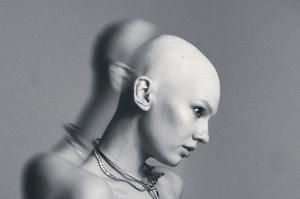
NEW YORK, NY, UNITED STATES, July 23, 2026 /EINPresswire.com/ — The next frontier in acting may not be mastered solely by those who command emotion—it may belong to those who comprehend how the brain generates it.
Kazakhstan-born actress Elizaveta Eremenko exemplifies a fresh wave of performers whose careers merge artistic expression with academic inquiry. While maintaining an active presence in film and theater, she has also gained recognition for investigating one of the industry’s most overlooked topics: the connection between neuroplasticity, physical identity, and authentic screen performance.
Eremenko is an accomplished actress, a jury panelist for the Follow Your Heart International Film Festival in New York, and a member of the DOM Cinema Arts Guild. Her work extends beyond performing into scholarly research, where she explores how neuroscience can transform the understanding of acting.
Performing Beyond Conventional Beauty Norms
Hollywood has progressively embraced greater inclusion, yet discussions about non-traditional appearance often center on representation rather than artistic merit.
Eremenko contends that visible difference can serve as a creative asset instead of a professional drawback.
Her research investigates how actors with distinctive physical traits often develop more sophisticated emotional instruments, as their careers require them to navigate external stereotypes while fostering deeper psychological authenticity.
Rather than seeing appearance as a limitation, she suggests it can fundamentally broaden an actor’s expressive capabilities.
Leveraging Neuroplasticity in Acting
In her peer-reviewed study, “Neuroplasticity and Acting: Why Unconventional Appearance Makes an Actor Emotionally Deeper,” published in the Advance Journal of Education and Social Sciences, Eremenko examines how ongoing adaptation affects emotional flexibility in performers.
The paper indicates that actors who repeatedly confront social bias and identity challenges often build psychological resilience and achieve greater emotional depth—qualities that prove valuable on screen.
Her work introduces neuroscience into discussions traditionally dominated by acting methods like Stanislavski, Meisner, or Strasberg, offering a complementary viewpoint grounded in brain adaptability.
Reimagining Alopecia in Modern Film
Eremenko’s second academic publication extends this exploration into philosophy, culture, and performance.
In “Aesthetics of Absence: A Phenomenological Analysis and Performative Reconceptualization of Alopecia in the Contemporary Cultural Landscape,” published in the Advance Journal of Arts, Humanities and Social Sciences, she analyzes alopecia not as a medical issue, but as a performative identity capable of challenging long-standing cinematic beauty ideals.
Rather than framing physical difference as something to hide, the research presents it as a source of artistic authenticity that can expand storytelling possibilities.
For an industry increasingly focused on inclusive casting, the work provides a theoretical framework linking representation to artistic substance.
Where Creativity Meets Research
Few actors actively publish academic studies while sustaining careers in front of the camera.
Eremenko belongs to that select group of professionals operating at the crossroads of cinema, psychology, and performance studies.
Her dual perspective enables her to examine acting not only through rehearsal and production but also through empirical observation and interdisciplinary scholarship.
As discussions about authentic representation, cognitive processes, and performer well-being continue to evolve across the global film industry, voices that connect science with creative practice are becoming increasingly essential.
For Elizaveta Eremenko, acting is not just about portraying emotion—it is about understanding how emotion is formed, transformed, and ultimately conveyed to audiences.
Valentina Varnavskaia
Florida Mens Fashion Week
email us here