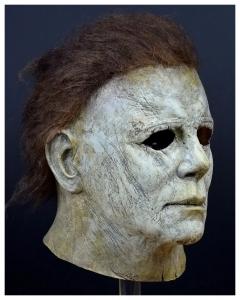
Michael Myers Maske aus Halloween 2018
Horror Shop Team
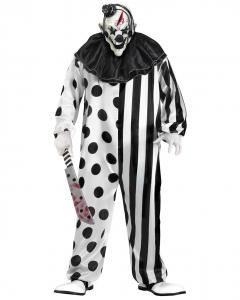
The analysis combines cultural-historical and psychological approaches and classifies the role of the clown motif within the costume segment.
MUNICH, GERMANY, September 7, 2026 /EINPresswire.com/ — On Monday, the retailer Horror-Shop.com, which specializes in event and themed decorations, published an industry report looking into the ongoing demand for costumes, masks, and accessories centered on the threatening clown figure. The analysis examines why a motif originally associated with children’s entertainment has remained one of the most enduring themes in the horror segment for decades. According to the company, the report links internal observations on purchasing behavior with findings from psychological research on coulrophobia—the fear of clowns—as well as the figure’s cultural history. The stated goal is to make the year-round, cross-generational demand for such items comprehensible.
The term coulrophobia refers to a pronounced fear of clowns. Unlike classic fears of animals or heights, this phenomenon has so far received comparatively little research, though it has gained increasing scientific attention in recent years. Surveys in several countries suggest that a noticeable portion of the adult population finds clowns unpleasant or frightening, with the intensity ranging from mild discomfort to a pronounced fear response. The report from Horror-Shop.com takes up these findings and places the commercial demand for horror clown motifs within the context of a broadly anchored cultural sensibility. The company emphasizes that the analysis considers the motif as part of entertainment and costume culture and makes no statements about clinically relevant anxiety disorders.
To contextualize the current demand, the report points to the long and contradictory history of the figure. The clown and its predecessors—from the court jester to the Pierrot figure to the circus clown of the 19th century—have always combined comedy with a darker, ambiguous side. The British pantomime Joseph Grimaldi, regarded as the founder of the modern clown, already embodied the contrast between public cheerfulness and private suffering in the early 19th century. The idea of the sad or threatening clown is thus not a product of recent pop culture but has accompanied the figure since its beginnings. The report argues that this inherent ambiguity, present from the start, makes the figure particularly suitable for the horror genre.
In the 20th and 21st centuries, pop culture has reinforced this ambivalence and transformed it into an independent motif. Literary and cinematic adaptations—including the widely adapted figure of Pennywise from Stephen King’s 1986 novel—have permanently shaped the image of the menacing clown. Added to this were recurring societal phenomena, such as the internationally observed reports of costumed figures in 2016, which briefly placed the topic in the spotlight of public attention. The report categorizes such waves as amplifiers of an already existing motif and notes that the underlying demand persists independently of individual media events.
On a psychological level, the report brings together several explanatory approaches. A frequently cited factor is the principle of the so-called uncanny valley, described by roboticist Masahiro Mori in 1970. According to this concept, figures that closely but not perfectly resemble humans evoke a sense of unease. The heavily made-up face of a clown alters and exaggerates human features, conceals actual facial expressions, and makes it difficult for the observer to assess intentions and emotions. Added to this is the fixed smile, which remains unchanged regardless of the situation and can therefore be perceived as inappropriate or threatening. The mask also hides the wearer’s identity, creating a sense of unpredictability. The report describes the fascination with the figure as a result of this interplay between familiarity and alienation.
„The menacing clown works because it turns an actually positive image into its opposite,” says Thomas Friese, founder and managing director of Horror-Shop.com. „A clown stands for cheerfulness and harmlessness. It is precisely this contradiction between expectation and appearance that generates the unease many people find appealing. The demand has been stable for years, regardless of whether a well-known film is currently playing in theaters.”
The company’s market observations classify the motif as a year-round segment with steady demand. While the majority of costume demand still falls in the autumn months, the category of horror clown costumes reportedly records consistent sales even outside the Halloween season—for example, for themed parties, stage performances, and experience events. The motif thus remains less tied to a single occasion than other seasonal themes. The report attributes this to the figure’s high recognition value, which requires no additional explanation and is understood in various cultural contexts.
Another section addresses the role of the mask as a central component of the motif. Since the distorted facial expressions and the hidden face largely determine the effect of the figure, a substantial portion of demand goes toward high-quality horror masks that allow for detailed, durable use. The report describes a shift from simple, short-lived items to more elaborately crafted masks made of latex or foam latex. According to the company, this development corresponds to a general trend in the segment, where craftsmanship and immersive impact are gaining importance. Buyers are increasingly acquiring such masks not for a single evening but for repeated use.
„With clown motifs, the mask determines the entire effect,” says a spokesperson from the product range development department at Horror-Shop.com. „A costume alone does not yet create a threatening figure. Only the face, the distorted features, and the rigid smile complete the impression. That is why demand is rising for masks that are well-made and can be worn multiple times.”
In addition to masks and costumes, makeup is also gaining importance according to the report. Some buyers forgo a finished mask and instead design the face of the menacing clown themselves using theatrical makeup and special-effects products. The report links this development to the growing availability of tutorials on digital platforms, which make techniques of effect makeup accessible to a broad audience. The company observes parallel demand for finished masks on one hand and makeup products for individual creation on the other. Both approaches follow the same basic pattern—the desire to reproduce the figure’s effect as convincingly as possible—but differ in the degree of manual effort involved.
Regarding the buyer structure, the report notes that the motif appeals to a comparatively broad target group. In addition to younger consumers and dedicated genre enthusiasts, older age groups also draw on the theme, which is attributed to the figure’s long cultural anchoring. Within the general costume assortment, the menacing clown ranks among the most enduring individual themes. The report thus classifies the motif as an example of a figure whose demand is driven less by short-term trends than by cultural familiarity passed down through generations.
The report also points to the international comprehensibility of the motif. Since the clown figure is known in many countries, its threatening variant functions largely without linguistic or cultural translation. For a retailer operating across Europe, this reportedly means comparable demand across national borders, which facilitates cross-border assortment planning and distinguishes the motif from regionally bound themes.
According to the company, the report is part of a series of market analyses dealing with structural features of the segment. Earlier publications had addressed the expansion of the horror business beyond the Halloween season, the establishment of dark aesthetics in home décor, and the psychological foundations of voluntary fear. The current analysis transfers this perspective to a single, enduring motif and describes, using the example of the menacing clown, how cultural familiarity and psychological impact can generate stable demand.
At the same time, the report offers a cautious classification of the phenomenon. Coulrophobia is described in research as a real, individually varying reaction that can range from mild discomfort to pronounced fear. The company points out that the popularity of the motif in costume culture is not equivalent to a trivialization of such reactions. The analysis explicitly considers the topic from the perspective of voluntary, playful engagement with fear within a clearly defined framework and makes no statements about the therapeutic treatment of phobias.
For the industry, the report combines several conclusions from the observations. It is expected that long-lasting, culturally anchored motifs such as the menacing clown will gain importance compared to short-term trends, as they enable predictable, year-round demand. For specialized retailers, this means that assortment depth and product quality in such segments are gaining weight. At the same time, the analysis points to the need for more even procurement, since demand for enduring motifs is less concentrated on a few weeks of the year than the rest of the seasonal business. The report thus classifies the menacing clown as an example of a lasting demand pattern not tied to a single season.
About Horror-Shop.com
Horror-Shop.com is a Germany-based specialty retailer headquartered in Munich. The company sells event equipment, costumes, special effects, and theme-specific decorations. The product range includes items for occasions such as Halloween, carnival, and themed parties, as well as articles for theater, film production, and interior design. Through its e-commerce platform, the company serves private consumers and business customers across Europe and operates its own logistics for product distribution.
Randy Mikels
Horror Shop
+49 89 63203389
email us here
Visit us on social media:
LinkedIn
Instagram
Facebook
YouTube
TikTok
X