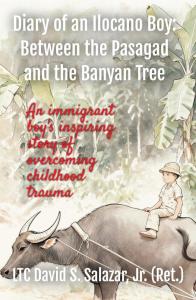
Childhood memories rarely arrive neatly packaged, and for author David S. Salazar Jr., the messy, painful, and sometimes funny recollections of growing up between two worlds have now found their way into a book that speaks directly to anyone who has ever felt caught between cultures.
Diary of an Ilocano Boy: Between the Pasagad and the Banyan Tree is Salazar Jr.’s account of leaving rural Cabugao, Ilocos Sur, Philippines, for plantation-era Na’alehu, Hawaii. The author, known as Amboy in his youth, documents how immigration, language barriers, and school life unfolded alongside family violence, creating a childhood that was as complicated as it was formative.
The memoir spans kindergarten through eighth grade, weaving together the search for belonging with the dangers that existed within his own household. Teachers, friends, and relatives appear as lifelines throughout the narrative, their support standing in stark contrast to the alcoholism, neglect, physical abuse, and his father’s infidelity that also marked those years. The book gives equal weight to connection and distress, refusing to soften either.
School and friendship were not separate from the pressures Amboy faced at home—they were part of the same childhood fabric, and the memoir treats them as such.
One particularly striking episode occurs in the summer of 1982, after seventh grade. When his mother sent him to find his father, Amboy discovered him with another woman and ran to the town cemetery. The Superman T-shirt he wore that day became a symbol of his resolve to become “Super Amboy”—stronger, protective of his mother, and capable of standing up to his father.
What distinguishes this memoir from other immigrant stories is its use of humor, Hawaiian Pidgin, and Ilocano memory to approach painful material. Na’alehu emerges from David’s recollections as a place of happiness as well as hardship. For readers interested in immigrant childhoods and cultural identity, the book connects the practical challenges of language and assimilation with the deeply personal work of finding a place between two cultures.
David had long thought about writing about his upbringing but hesitated, worried about exposing his insecurities. He credits Hurricane Lala as the painful trigger that brought those memories rushing back and inspired the memoir. His purpose in revisiting this difficult territory is to encourage resilience and shed light on the profound effects of childhood trauma, including the emotional wounds that persist well into adulthood.
The book’s intended audience is broad: young adults, parents, teachers, school counselors, social workers, behavioral therapists, and mental health workers all fall within its reach.
David hopes his experiences will deepen understanding of Complex Post-Traumatic Stress Disorder (CPTSD) and how it differs from PTSD. This goal connects to his larger mission of helping mental health professionals and educators recognize the deeply rooted emotional pain that can begin in childhood and carry into adult life.
He also wants to spark conversation about whether early intervention for children experiencing trauma at home can lead to better adult outcomes. These educational aims are grounded in his personal account of family dysfunction, making the book both a memoir and a teaching tool.
Alongside that focus, David asks readers to remain open to the plight of immigrants coming to the United States. His account brings cultural adjustment and childhood adversity into the same frame, highlighting both the people who helped him endure and the wounds that did not simply vanish as he grew older.
David S. Salazar Jr. emigrated from the Philippine countryside to Na’alehu, Hawaii, in September 1974. Known in childhood as Amboy, he draws on that upbringing for this memoir.
Available now.
Get your copy here:
https://www.amazon.com/dp/B0HLKQBVSL
For review copies, interview requests, or additional information, please contact:
David S Salazar Jr.
BrightKey PR
saladsjr@gmail.com
Why it matters: This memoir arrives at a moment when conversations about childhood trauma and immigrant experiences are increasingly central to public discourse. By pairing a deeply personal account with an educational mission around CPTSD, Salazar Jr. offers a resource for professionals and families alike, reminding readers that resilience and vulnerability often grow from the same roots.