FGTO Logo
The Federation of Global Tamil Organizations is calling on the newly minted Nobel laureate to help transform decades of documentation into real legal accountability
FGTO calls on the OHCHR Sri Lanka Accountability Project (OSLAP) to prioritize analysis of systematic group-targeting of Tamils during the final phase of the conflict (2008–May 2009)”— FGTOOTTAWA, ONTARIO, CANADA, October 11, 2026 /EINPresswire.com/ — The Federation of Global Tamil Organizations (FGTO) has extended its congratulations to Judge Navanethem “Navi” Pillay following her selection for the 2026 Nobel Peace Prize, an honor bestowed in recognition of her lifelong contributions to peace and the advancement of international law. For Tamil communities scattered across the globe, the hope is that this prestigious acknowledgment will add new momentum to the long-running fight for justice on behalf of those who suffered during Sri Lanka’s war against the Tamil people — a campaign that FGTO frames as genocide and one that it wants formally adjudicated by an independent judicial body.
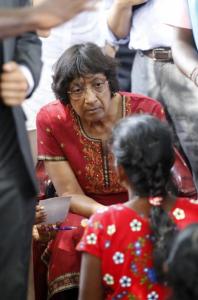
Judge Pillay, a South African jurist of Tamil descent who served as the United Nations High Commissioner for Human Rights from 2008 to 2014, has spent decades shaping international justice mechanisms, including key roles at the International Criminal Tribunal for Rwanda and the International Criminal Court. Her career milestones resonate deeply with Tamils worldwide, who see in her work a pathway toward addressing their own unresolved trauma.
The organization recalls with appreciation her early and persistent warnings about the perilous situation facing Tamils in Sri Lanka during the brutal final months of the war in 2009. In March of that year, her office relayed credible reports of thousands of civilian deaths and injuries, even inside areas officially designated as “no-fire zones,” and raised the alarm that the Sri Lankan military’s actions could rise to the level of international crimes. While much of the UN apparatus remained quiet, she was a vocal advocate for an international, independent inquiry — a call that went unheeded by the United Nations Human Rights Council (UNHRC) until it finally mandated an investigation in 2014, following intense pressure from the Tamil diaspora and human rights advocates. FGTO maintains that the accountability measures that emerged from that process have fallen short of what is needed.
At the heart of FGTO’s current demands is a push for an independent probe into the designation and subsequent shelling of the ‘No Fire Zones,’ with a specific focus on whether those actions reveal deliberate targeting of Tamil civilians or constitute genocidal intent.
In 2012, an internal United Nations review admitted to serious failures in how the organization handled the crisis. While subsequent investigations and accountability efforts have laid important groundwork, FGTO argues that honoring the victims demands more than documentation — it requires converting those findings into meaningful legal proceedings.
The internal UN report (the Petrie Review) concluded:
“Events in Sri Lanka mark a grave failure of the UN to adequately respond to early warnings and to the evolving situation during the final stages of the conflict and its aftermath, to the detriment of hundreds of thousands of civilians and in contradiction with the principles and responsibilities of the UN.”
The Petrie Review also revealed that the UN withheld internally compiled casualty figures, refrained from publicly stating that most recorded deaths resulted from government shelling, and avoided confronting attacks on civilians and hospitals out of concern for preserving humanitarian access. To date, no dedicated UN investigation has been established specifically to examine allegations of genocide against Tamils during the war’s final phase.
A continuing commitment to Tamil rights and justice
Judge Pillay’s involvement with Tamil concerns did not end with her UN tenure. In a 2015 interview with Thanthi TV, as reported by Tamil Guardian, she spoke out against impunity for serious international crimes and discussed evidence relevant to a genocide determination, including reported systematic sexual violence against Tamil women and girls. She noted that the required intent pertains to the destruction of a protected group in whole or in part, while underscoring that it is ultimately a court’s role to weigh the evidence and render a decision.
On 18 May 2020, the Tamil diaspora observed Tamil Genocide Remembrance Day globally. In a message marking the occasion, she paid tribute to Tamil victims and called for collective international action to secure Tamil rights, justice and reparations. She also highlighted ongoing issues such as discrimination, land disputes and detentions, and condemned the presidential pardon of the soldier convicted in the Mirusuvil massacre. FGTO has welcomed this show of solidarity with affected families in their quest for redress.
At the March 2021 “Loss of the Tamil Homeland” conference, Judge Pillay voiced hope that evidence concerning Sri Lanka would eventually be scrutinized in criminal proceedings. FGTO views this judicial focus as a constructive foundation for collaboration toward a comprehensive and independent evaluation of Tamil genocide allegations.
An invitation to work with Tamil survivors
Building on her track record, FGTO is now respectfully inviting Judge Pillay to engage directly with Tamil survivors, families of the disappeared, civil society representatives and independent legal experts to identify concrete pathways for advancing accountability.
FGTO would welcome her assistance, in ways consistent with her professional obligations, by:
1. Supporting access to justice: offering a legal opinion on the Tamil diaspora-supported booklet Justice for Sri Lanka’s Genocide Against Tamils, released in 2024, or helping connect survivors and their representatives with qualified lawyers and organizations able to provide legal assistance, including pro bono support.
2. Supporting rigorous examination of genocide: encouraging independent assessment of the evidence, including evidence relevant to intent and patterns of violence, alongside war crimes and crimes against humanity.
3. Keeping survivors at the centre: supporting meaningful participation by affected families, with informed consent, protection from reprisals and respect for their dignity.
The Council has tasked the Office of the United Nations High Commissioner for Human Rights (OHCHR) with collecting, consolidating, analysing and preserving evidence of serious violations in Sri Lanka, as well as supporting proceedings before authorities with competent jurisdiction. FGTO is now calling on the OHCHR Sri Lanka Accountability Project (OSLAP) to make analysis of systematic group-targeting of Tamils during the final phase of the conflict (2008–May 2009) a top priority, and urging states to provide the resources and cooperation necessary to turn this work into genuine accountability.
FGTO is also renewing its demand for a dedicated, independent examination of genocide against Tamils — one that builds on existing documentation, rigorously assesses the applicable legal requirements and supports proceedings before competent courts.
Justice, truth, reparations and guarantees of non-recurrence can help create the conditions for lasting peace. They should be pursued with fairness, independence and respect for the rights of all affected communities.
FGTO urges the United Nations Human Rights Council to immediately institute an independent fact-finding mandate on genocide and related international crimes against the Tamil people, and calls on Nobel laureate Navi Pillay to leverage the global platform of her Peace Prize to speak again to the facts that the Council refused to address in 2009.
FGTO
Federation of Global Tamil Organizations
+ +1 647-875-7354
Visit us on social media:
Facebook
YouTube
X
Other
—
**Why it matters:** This development signals a potential shift in the international accountability landscape for Sri Lanka, as a Nobel laureate with deep ties to the issue could amplify calls for a formal genocide investigation that the UN has long avoided. If Judge Pillay accepts the invitation, it could pressure the UNHRC and OHCHR to revisit their approach to the Tamil question and move from documentation toward prosecution.