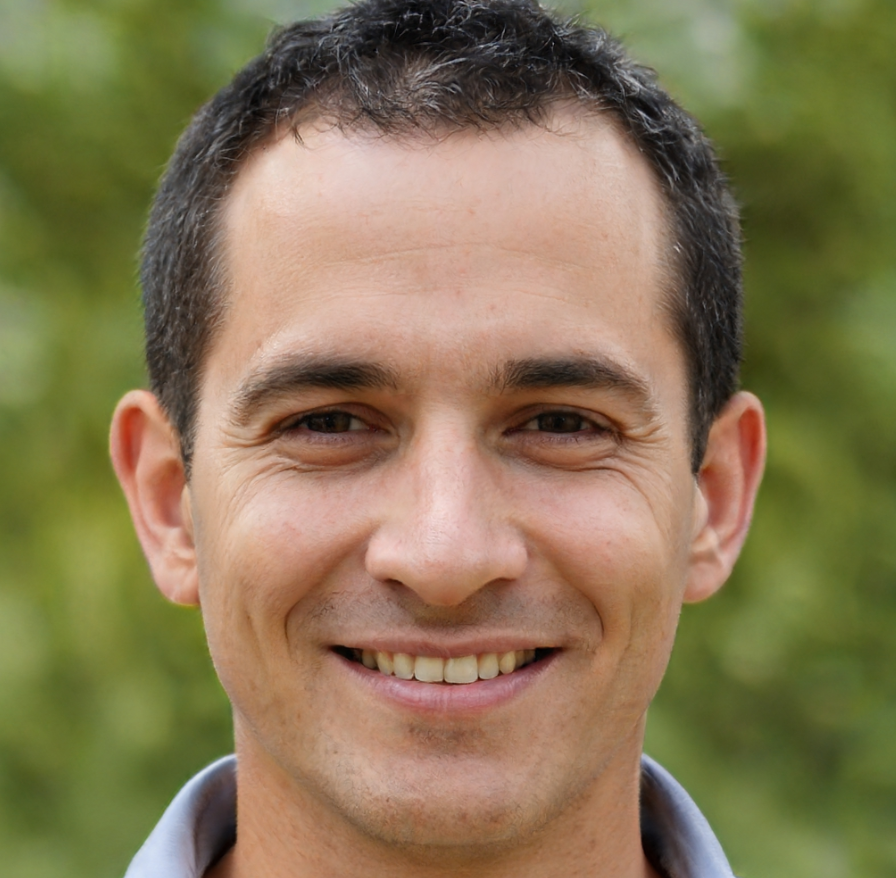
Maria Teresa Hernandez, the creator of Back to 18th Street, and co-director Miranda Gonzalez are longtime friends who originally met as students at Notre Dame High School for Girls in Chicago.

A Pilsen time-travel narrative drawing on Mexican American Chicago, combining live-action and AI-enhanced filmmaking across 2026 and 1962.
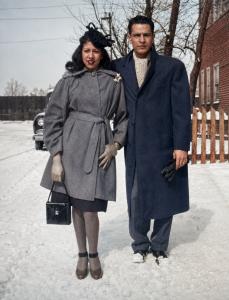
Back to 18th Street is a love letter to Mexican American Chicago and especially to Pilsen — a community whose history deserves to be seen and carried forward.”— Maria Teresa Hernandez, Founder & CEO, Yellow House CollectiveCHICAGO, IL, UNITED STATES, August 28, 2026 /EINPresswire.com/ — In 1964, the Chicago Tribune ran an extensive multi-page piece titled “Our Mexican Americans II” spotlighting Fortino and Connie Méndez, a young Mexican American couple building a life, a business, and a community in Chicago.
Sixty-two years later, that article has helped spark Back to 18th Street, a new scripted microdrama from Yellow House Studios, set to film this weekend in Chicago’s Pilsen neighborhood.
The series, created by Chicago native Maria Teresa Hernandez, takes loose inspiration from both her own family background and the wider history of Mexican Chicago to tell a fictional tale centered on identity, ownership, belonging, displacement, and what one generation leaves behind for the next.
“What stayed with me was seeing a major Chicago newspaper, in 1964, devote that kind of space to Mexican Americans and celebrate the fullness of their lives,” said Hernandez. “It made me think about how our communities are represented today — when they’re celebrated, when they’re misrepresented and when their stories disappear altogether. Back to 18th Street is a love letter to Mexican American Chicago, and especially to Pilsen.”
A TIME-TRAVEL STORY ROOTED IN REAL HISTORY
Back to 18th Street centers on Anita Méndez, a young Mexican American woman mourning the sudden death of her parents and wrestling with whether to keep her family’s longtime Pilsen building or move away from Chicago.
After coming across an heirloom pocket watch, Anita steps through present-day 18th Street and lands in 1962 Pilsen, where she encounters her grandfather as a young man, before he bought the building that would eventually anchor their family for generations.
As the timeline starts to shift, Anita has one day to grasp the people, sacrifices, and community that shaped the future she inherited—and to fix what she unknowingly set in motion.
Crafted in the rapid-fire style of the microdrama—short episodes, immediate hooks, and cliffhanger-driven storytelling—the series also weaves genuine historical context into its fictional world, including Pilsen’s shifting demographics, Mexican American entrepreneurship, neighborhood activism, obstacles to property ownership, and the community networks that helped families build lives in Chicago.
The aim is to make history feel immediate, emotional, and bingeable.
LIVE ACTION MEETS AN AI-ASSISTED 1962
The present-day storyline will be shot with live actors in Chicago. Anita is the character who crosses into 1962, where AI-assisted filmmaking will help expand her performance into a historically inspired Pilsen storyworld.
Yellow House is teaming up with Visible People, an AI rendering and experiential media production company led by CEO and Chicago native Erik Bankston, to construct the series’ 1962 storyworld.
“These tools let us expand what is possible without losing the human performance at the center of it,” said Bankston. “We can take Anita’s journey and build a 1962 Chicago around her at a scale that would once have been out of reach. AI is the paintbrush. The story, performance and point of view are still human.”
The production brings together Latino actors, writers, filmmakers, producers, editors, and creative technologists, with a focus on broadening representation both on screen and throughout the evolving production process.
MADE IN CHICAGO, FROM THE INSIDE OUT
The series is co-directed by Miranda Gonzalez and Chicago filmmaker Erick Juarez.
Hernandez and Gonzalez first crossed paths as sophomores at Notre Dame High School for Girls in Chicago, bonding over their Mexican American heritage, a shared passion for the arts, and a desire to see the richness of their culture reflected on screen. As teenagers, they vowed that one day they would create together. More than three decades later, Back to 18th Street fulfills that promise.
For Gonzalez, the project carries deep personal significance—not only as a filmmaker but also as a lifelong Chicagoan.
“As someone born and raised in Chicago, I know how rare it is for stories about our neighborhoods to be told by those of us who were born here and still live here,” said Gonzalez. “Back to 18th Street is the first of many neighborhood stories we want to amplify. Pilsen is dear to me. I remember falling asleep in the booths at Nuevo Leon as a child, and years later walking my own children into Casa del Pueblo when it was still on Blue Island. Passing down my Mexican culture matters to me. Passing down my Chicago culture matters just as much.”
Juarez brings another Pilsen tie to the project. His recent Pilsen-set short Cake, inspired by his own Chicago upbringing, debuted at the Cleveland International Film Festival and later earned Audience Choice recognition at the Chicago Latino Film Festival.
“Pilsen carries generations of history within a few city blocks, and Back to 18th Street gave us an opportunity to explore that history through a very contemporary form,” said Juarez. “The challenge was to honor the specificity of the community — its evolution, its families and what people built there — while creating a story that feels cinematic, emotional and propulsive. That intersection of history and a new storytelling language is what made the project exciting to me.”
Live-action production on Back to 18th Street starts Saturday, August 29, and continues through Sunday in Chicago, including Pilsen.
Additional release and distribution details will be announced.
Interviews, limited behind-the-scenes access, archival family materials, the original 1964 Chicago Tribune feature and first-look imagery are available upon request.
ABOUT YELLOW HOUSE STUDIOS
Yellow House Studios is the original storytelling arm of Yellow House Collective, developing culturally rooted serialized entertainment for the vertical era.
MEDIA CONTACT
Maria Teresa Hernandez
Founder & CEO, Yellow House Collective
MariaTeresa@YellowHouseCo.com
###
Maria t Hernandez
Yellow House Collective
+1 773-517-7769
email us here
Visit us on social media:
LinkedIn