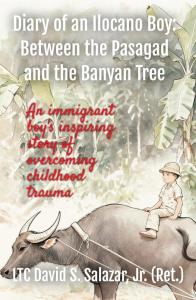
A new memoir from David S. Salazar Jr. does more than retell a childhood—it uses one boy’s story to shed light on how early wounds shape adult lives.
When David, known as Amboy, left rural Cabugao, Ilocos Sur, Philippines, for plantation-era Na’alehu, Hawaii, he wasn’t just crossing an ocean. In Diary of an Ilocano Boy: Between the Pasagad and the Banyan Tree, Salazar Jr. layers immigration, language struggles, and school days over a household shadowed by violence.
The book spans kindergarten through eighth grade, tracing a search for identity amid family turmoil. Teachers, friends, and relatives offered support along the way, even as alcoholism, neglect, physical abuse, and his father’s infidelity marked those years. The result is a narrative that holds both warmth and pain in the same frame.
School and friendship weren’t escapes from the pressures at home—they were part of the same childhood David remembers.
A defining moment arrives in the summer of 1982, just after seventh grade. Sent by his mother to locate his father, Amboy instead found him with another woman and ran to the town cemetery. The Superman T-shirt he wore that day became a symbol of his resolve to become “Super Amboy”—strong enough to shield his mother and stand up to his father.
What sets this memoir apart is its tone. Humor, Hawaiian Pidgin, and Ilocano memory give the difficult material a distinct voice. Na’alehu comes across as both a joyful and a hard place, and the book speaks directly to readers interested in immigrant childhoods and cultural identity—showing how language and assimilation challenges intertwine with the personal quest to belong in two worlds.
Salazar Jr. had long considered writing about his upbringing but hesitated, fearing exposure of his insecurities. He credits Hurricane Lala as the painful trigger that resurfaced memories and pushed him to write. His goal is to foster resilience and highlight the lasting impact of childhood trauma, including emotional scars that follow people into adulthood.
The book is aimed at young adults, parents, teachers, school counselors, social workers, behavioral therapists, and mental health professionals.
Through his story, Salazar Jr. hopes to clarify Complex Post-Traumatic Stress Disorder (CPTSD) and how it differs from PTSD. That understanding, he believes, can help educators and mental health workers recognize deep-rooted emotional pain that often begins in childhood and persists for decades.
He also wants readers to consider whether early intervention for children experiencing trauma at home could lead to healthier adult lives. These are his stated educational goals, grounded in his own account of family dysfunction.
Beyond that, Salazar Jr. asks readers to remain open to the struggles of immigrants arriving in the United States. His memoir places cultural adjustment and childhood adversity side by side, honoring the people who helped him endure while acknowledging the wounds that stayed with him.
Salazar Jr. emigrated from the Philippine countryside to Na’alehu, Hawaii, in September 1974. Known as Amboy in his youth, he now draws on those experiences for this book.
The memoir is available now.
Get your copy here:
https://www.amazon.com/dp/B0HLKQBVSL
For review copies, interview requests, or additional information, please contact:
David S Salazar Jr.
BrightKey PR
saladsjr@gmail.com
Why it matters: This memoir turns one immigrant boy’s painful childhood into a resource for mental health professionals and educators. By linking personal memory to broader conversations about CPTSD and early intervention, Salazar Jr. offers a model for how storytelling can support healing and understanding in communities that often overlook these hidden struggles.