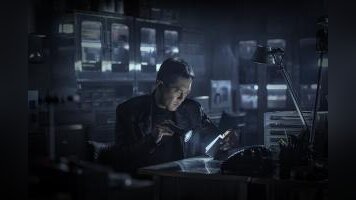
Hong Kong crime cinema has never lacked for cunning criminals, compromised cops, or elaborate conspiracies. What it sometimes misses is a willingness to rearrange those familiar pieces into something genuinely strange. That is exactly what director James L.J. Hung attempts with Mastermind (偵戰), a labyrinthine locked-room thriller that puts its own detective at the center of the crime he is meant to solve. The result is atmospheric, eccentric, occasionally exasperating—and impossible to ignore.
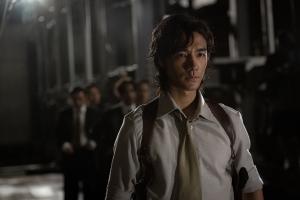
The setup is irresistible. A suspect vanishes from a locked detention cell at the East Precinct Police Station, only to turn up dead roughly 10 kilometers away inside a secured archive at police headquarters. The murder investigation takes a stunning turn when a distinctive bullet—numbered 9999, tied to investigating detective Maximo (Louis Koo)—becomes evidence against him. What starts as an impossible disappearance quickly becomes a professional nightmare.
The screenplay’s shrewdest move is this reversal of investigative authority. Instead of placing its hero safely outside the mystery, observing from a privileged distance, Mastermind makes him part of the puzzle. Every deduction carries personal stakes; every apparent breakthrough threatens his credibility. It is a clever departure from the standard police procedural, though the film occasionally mistakes piling on complications for deepening suspense.
Also worth a look: Prime 1 Studio opens pre-orders for $1,399 TEKKEN 8 Nina Williams statue on October 29 and Onwubiko Agozino’s new book teaches kids MLK’s compassion over hatred.
Koo supplies the necessary center of gravity. His Maximo is an intellectually formidable, scientifically minded detective whose analytical brilliance is matched only by his social awkwardness. He processes information with clinical precision but treats ordinary human interaction like an unusually troublesome math problem.
He is backed by an ensemble that gives the film’s institutional maneuvering real dramatic weight. Simon Yam brings imposing, understated authority to his Chief Inspector, while Tse Kwan-ho, playing the Deputy Commissioner of Intelligence, delivers a more tightly wound intensity. Ci Sha adds another layer of intrigue to the shifting loyalties and complex power dynamics. Amy Lo offers a fresh perspective as a forensic pathologist navigating the predominantly male world of law enforcement.
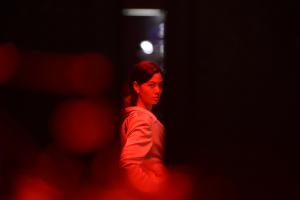
The actors are especially effective at hinting at tensions the screenplay lacks time to fully develop. A hesitation, a controlled expression, a routine exchange—all can carry the implication of competing loyalties. Their collective experience sustains the film even when several characters function mainly as vehicles for delivering information or advancing revelations.
Hung’s direction is most distinctive in how it treats physical space. Detention facilities, archives, interrogation rooms, and police corridors form an elaborate geography of restricted access. The camera pays close attention to barriers, sightlines, and character positioning, giving the investigation a spatial dimension often absent from contemporary procedural thrillers.
Confrontations across iron bars become especially suggestive. The apparent balance of power can shift through blocking alone: the person physically confined can assume psychological control over the officer standing outside. These moments show how suspense can arise from composition rather than explanation.
The film’s visual environment is equally assured. Hung imagines a fictionalized Hong Kong enveloped in relentless rain, lightning, and neon reflected against darkened streets. Government interiors acquire a claustrophobic severity, while sealed archives and shadowy corridors seem to hide dangers beyond the immediate investigation.
The atmosphere occasionally approaches comic-book expressionism, inviting comparisons with Gotham City. Yet the visual extravagance remains grounded in recognizable urban settings. Rather than inventing an entirely fantastical landscape, the film makes familiar places feel subtly hostile.
One particularly effective image involves blood emerging beneath the door of a dark archive. Its impact depends on suggestion rather than spectacle: the audience sees the consequences of violence before understanding the circumstances. It is concise visual storytelling in a film that elsewhere struggles to resist explaining itself.
But Mastermind is not content to remain a cerebral detective story. As the investigation expands, the film incorporates intelligence operations, scientific speculation, psychological manipulation, and increasingly elaborate action sequences. Gunfights and explosive confrontations shift the emphasis toward the kinetic pleasures associated with Hong Kong crime cinema.
The transition is not entirely graceful. Hung seems determined to pack several different thrillers into roughly 90 minutes. Developments arrive so urgently that audiences sometimes have little chance to assess their significance before another complication takes over.
Explanatory dialogue and flashbacks occasionally substitute for organic narrative development. Certain revelations seem designed less to illuminate character motivations than to extend the screenplay’s elaborate machinery. A successful mystery encourages viewers to assemble clues and test hypotheses; Mastermind sometimes withholds so much context that meaningful participation becomes difficult.
Yet the film’s unruliness is also part of its appeal. Its unexpected black comedy recalls a distinctive quality of Hong Kong genre filmmaking: the ability to place absurdity, violence, and bureaucratic self-importance within the same dramatic register. Workplace rivalries become almost farcical, professional arrogance borders on caricature, and institutional pomposity interrupts genuinely threatening situations.
Not every tonal collision succeeds, but the combination prevents the film from settling into anonymous procedural efficiency.
There are echoes of the spatial precision associated with Johnnie To and the heightened theatricality of Hong Kong’s broader action tradition. Hung’s approach, however, favors architectural puzzles and intellectual reversals over the choreography of physical confrontation. His most interesting contribution is the attempt to make detective fiction visually dynamic.
That ambition deserves recognition without excusing the film’s shortcomings. Its characters are sometimes subordinated to its conceptual architecture, its explanations occasionally strain credibility, and its accumulation of genres lacks the discipline of the strongest Hong Kong noir.
Still, Mastermind offers something more valuable than another professionally assembled exercise in familiar conventions: a recognizable directorial personality. Koo’s controlled performance, an accomplished supporting ensemble, and striking visual craftsmanship sustain a film whose storytelling is frequently more adventurous than elegant. Hung has not entirely mastered the elaborate structure he has built, but he understands that commercial entertainment need not surrender its imagination to formula.
Why it matters: Mastermind may not solve every problem it creates, but its willingness to take risks—blending locked-room logic, dark humor, and neo-noir visuals—signals a Hong Kong genre cinema still hungry for reinvention. For audiences tired of predictable thrillers, this messy, magnetic experiment proves that ambition can be its own reward.
Noah Rodriguez
Cloqué