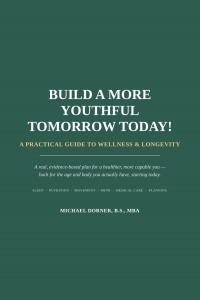
For decades, wellness advice has been served up as one-size-fits-all. Michael Dorner wants to change that. In his new book, BUILD A MORE YOUTHFUL TOMORROW TODAY!: A PRACTICAL GUIDE TO WELLNESS & LONGEVITY, the veteran fitness and healthcare professional argues that effective aging strategies must start with two fundamental facts: how old you are and whether you are male or female.
Dorner, who holds a B.S. and an MBA and has spent over 35 years in fitness, wellness, and healthcare, structures his guide around seven pillars: sleep, nutrition, movement, daily habits, mind and relationships, medical care, and financial planning. This broad framework deliberately pulls wellness beyond the dinner plate and the gym floor, giving relationships, healthcare, and even personal finance a seat at the table alongside diet and exercise.
What sets the book apart is its insistence that advice must vary depending on who is receiving it. Dorner draws a clear line between recommendations that change with age or biological sex and those that do not. To illustrate, he contrasts the needs of a 30-year-old man with those of a 60-year-old woman, showing why a single set of guidelines cannot serve everyone equally. The book examines not only what changes in the body over time but also what research suggests people can do about it.
Readers looking for specific, actionable guidance will find dedicated discussions on sleep patterns, food choices, exercise regimens, hormonal transitions, and medical screening protocols. These topics bridge everyday habits with larger questions about healthcare. The emphasis throughout is on identifying where personal characteristics matter most, rather than asking readers to blindly apply broad wellness recommendations that may not fit their actual circumstances.
Practical resources give the book a hands-on dimension. Meal-planning samples and exercise schedules address recurring activities, while a dedicated balance routine targets fall prevention. Even sunblock selection gets a spot, adding another concrete preventive measure to the mix. Together, these tools ensure the book is not just about theory but about what readers can do starting tomorrow.
The guide is heavily documented, with claims backed by sources and citations. Dorner also takes into account the real-world constraints of jobs, family commitments, and other daily obligations. Instead of pitching a short-term transformation program, he focuses on practices designed to remain workable over the long haul. This combination of research and routine is especially relevant for readers who want detail without a plan that assumes unlimited time or freedom from other responsibilities.
Dorner’s core message links the value of early prevention with the possibility of starting later in life. He encourages readers to begin from where they are, using age-specific information to evaluate both current habits and future health and capability. Having managed his own autoimmune illness, Dorner says he has put every principle in the book into practice, adding firsthand experience to his professional credentials.
Available now, the book can be purchased here:
https://www.amazon.com/dp/B0HFTXNNQQ
For review copies, interview requests, or additional information, please contact:
Michael Dorner
BrightKey PR
media@brightkeypr.com
Why it matters: Most wellness advice ignores the biological realities that make a 30-year-old man and a 60-year-old woman fundamentally different. Dorner’s guide offers a more personalized path forward, one that could help readers avoid the frustration of following recommendations never designed for them in the first place. If the future of aging well is tailored, not generic, this book may be an early roadmap.