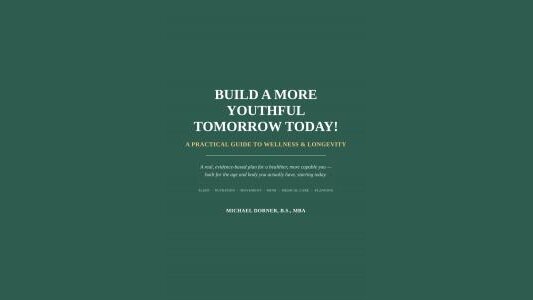
Build a more youthful tomorrow today! pairs research on aging with practical routines, drawing on Dorner’s experience in fitness, wellness, and healthcare.
Not all aging advice fits all people — and Michael Dorner has built a book around that premise. In BUILD A MORE YOUTHFUL TOMORROW TODAY!: A PRACTICAL GUIDE TO WELLNESS & LONGEVITY, Dorner puts age and biological sex at the heart of a seven-part approach to wellness. Explanations of how the body changes are paired with research-based responses and practical resources, so readers can weigh recommendations against their own stage of life.
That framework spans sleep, nutrition, movement, daily habits, mind and relationships, medical care, and financial planning. The range pulls physical activity and food choices into a wider conversation about aging. Just as importantly, it gives relationships, healthcare, and financial preparation a seat in the same structure — wellness here is not confined to the dinner table or the gym.
Also worth a look: Kate Schilling Turns Scuba Diving Passion Into Ocean Activity Book for Kids and Karen L West Lands Three Literary Honors Spanning Thriller, Fantasy and Speculative Fiction.
Within those areas, Dorner separates guidance that shifts with age or biological sex from guidance that holds steady regardless. To show why a single set of recommendations cannot serve everyone equally, the book contrasts the needs of a man at 30 with those of a woman at 60. Its look at aging asks two questions at once: what changes over time, and what the cited research says people can do about it.
For readers who want specifics, the book digs into differences involving sleep, food, exercise, hormonal transitions, and screening. These topics tie everyday routines to questions about medical care. The goal is to pinpoint where personal characteristics matter, rather than handing readers broad wellness advice without asking whether it fits their circumstances.
Practical resources turn that discussion into material readers can consult: meal-planning samples and exercise schedules cover recurring activities, while a balance routine centers on fall prevention. Guidance on choosing sunblock adds another concrete preventive consideration. Together, these resources give the book an application-focused side alongside its explanations of aging, covering both the organization of regular routines and individual health-related choices.
The guide stresses documentation, with claims backed by sources and citations. Its approach to putting advice into practice accounts for jobs, family commitments, and other constraints on daily life. Instead of framing wellness as a short transformation program, Dorner focuses on practices meant to stay workable over time. That mix of research and routine speaks to readers who want detail without a plan that assumes unlimited time or freedom from other responsibilities.
Dorner’s message connects the value of early prevention with the possibility of starting later in life. The guide urges readers to begin from their current circumstances, using age-specific information to weigh both present practices and future health and capability.
Michael Dorner, B.S., MBA, has worked in fitness, wellness, and healthcare for more than 35 years. While managing his own autoimmune illness, he has put every principle in the book into practice — firsthand experience that adds to his professional background.
Available now. Get your copy here:
https://www.amazon.com/dp/B0HFTXNNQQ
For review copies, interview requests, or additional information, please contact:
Michael Dorner
BrightKey PR
media@brightkeypr.com
Why it matters: Wellness advice is often delivered as a one-size-fits-all prescription, yet Dorner’s framework argues that age and biological sex change what recommendations make sense. By folding medical care, relationships, and financial planning into the same seven-pillar structure, the book treats longevity as a long-term, personal project rather than a quick fix — a shift that could reshape how readers judge the guidance they encounter.