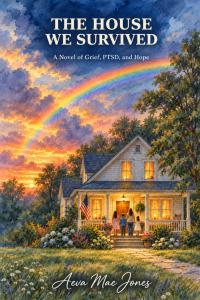
Aeva Mae Jones’s novel places a mother’s need for support alongside her responsibilities to a family living through trauma and loss.
It is often the person holding a family together who is least likely to ask for help—and that very contradiction drives the emotional core of Aeva Mae Jones’s latest work. In The House We Survived: Novel of Grief, PTSD, and Hope, protagonist Millie finds that the stability she craves is constantly disrupted by shifts in her marriage, health problems inside her household, and the weight of bereavement. The book sets the demands of motherhood directly against a quieter, harder-to-admit need: her own sense of security.
Millie’s path toward a more stable life begins when she enlists in the Army. But the collapse of her first marriage and an unexpected pregnancy derail those plans, leaving her to wonder what comes next. Later, as she builds a life with Marcus and their children, his medical discharge and worsening PTSD make home life increasingly volatile. Illness and grief pile additional responsibilities onto Millie, forcing her to care for others at a moment when her own emotional reserves are stretched thin.
The narrative does not only catalog Millie’s sacrifices; it also makes room for the people who step in to support her. Her determination to shield her family is balanced by the assistance she receives from others, and by a growing recognition that safety is something she deserves as much as anyone else. In this way, starting over becomes a story about both giving and receiving care—not merely a test of how much one mother can shoulder alone.
Jones is careful to acknowledge the real emotional toll of trauma without letting suffering define the story. Love, faith, and hope anchor the book’s perspective. When describing her own healing process, she draws a clear line between allowing joy back into her life and forgetting her daughter or relegating grief to the past. That understanding shapes her emphasis on encouragement: the possibility of a brighter future does not require erasing loss. Her stated goal is to offer hope while staying truthful about the struggle that often precedes it.
For readers interested in fiction about motherhood, caregiving, or military family life, the novel links those themes through the pressures bearing down on a single household. Jones especially hopes to reach women who feel isolated during hard times. The message she wants to convey is that needing help, or failing to manage everything, does not make someone less worthy of love. Alongside its exploration of PTSD and grief, the book’s focus on dependable support gives that intended audience another way in: care for the caregiver, not just acknowledgment of all she does for others.
“I wrote The House We Survived because, after my daughter died, I knew what it felt like to be surrounded by people and still feel completely alone.”
— AEVA MAE JONES
Aeva Mae Jones is the author of The House We Survived: Novel of Grief, PTSD, and Hope.
Available now. Get your copy here:
https://www.amazon.com/dp/B0HLXWT2PK
For review copies, interview requests, or additional information, please contact:
Aeva Mae Jones
BrightKey PR
media@brightkeypr.com
Why it matters: In a cultural moment where caregiving burnout and mental health struggles are increasingly visible, Jones’s novel reframes resilience not as solitary endurance but as the courage to accept help. It offers a narrative where a mother’s survival is tied to community support as much as personal strength—a perspective that resonates beyond fiction for many readers navigating similar realities.