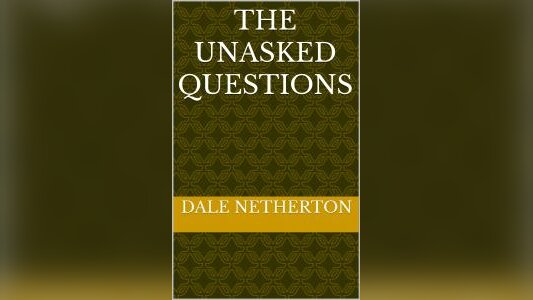
In an era saturated with ready-made answers, one new book dares to argue that the most critical step in any search for truth isn’t finding the right response—it’s daring to ask the right question in the first place. Dale Netherton’s The Unasked Questions shines a spotlight on the inquiries that professionals across fields routinely sidestep, positioning curiosity not as an afterthought but as a non-negotiable starting point.
Netherton’s compilation specifically targets questions that are too often ignored or deliberately dodged. Rather than relegating questioning to a secondary, optional step, the work places it at the very heart of examining assumptions, entrenched positions, and entire subjects that have been left unexplored.
Organized as a collection, the book groups its questions around various professional and institutional circles whose foundational premises can effectively shut down inquiry from the outset. Netherton identifies this as a major barrier: when a stance begins by excluding the possibility of questioning, the very queries that could test, clarify, or challenge that stance never get a fair hearing.
Also worth a look: The Dairy Alliance brings a Tennessee dairy farmer’s fight against hunger to movie theaters and CineVerge bets big on rights-controlled vertical series with 11 titles and a 90-season plan.
The text pushes readers to pay attention not only to the answers that populate public and professional discourse, but also to the questions that are conspicuously missing from those conversations.
The Unasked Questions treats the act of avoidance itself as a subject deserving serious study. Its focus falls on matters the author sees as plainly—and often with official sanction—evaded, along with the long-standing tendency to regard certain lines of inquiry as taboo.
Netherton argues that this pattern of avoidance has persisted for centuries, with little sign that it is reversing course. By collecting and systematically organizing these overlooked questions, the book provides a practical starting point for anyone trying to identify where inquiry has been artificially constrained.
This work is written for readers who already understand that questioning is essential to the pursuit of truth. Its core premise holds that genuine truth-seeking demands more than simply accepting the terms of an existing argument. It requires asking what has not been asked, considering why a particular question might have been set aside, and recognizing when foundational assumptions have made honest inquiry difficult or unwelcome.
Across its structured examination of professional and institutional thought patterns, The Unasked Questions directs attention to the powerful role that premises play in shaping what can and cannot be discussed. The book does not treat questioning as an abstract habit; instead, it frames questions as the necessary starting point from which claims, positions, and omissions can be more closely scrutinized. In doing so, it invites readers to examine the invisible boundaries that determine which inquiries are permitted and which are left outside the conversation entirely.
For anyone concerned about how established viewpoints can limit investigation, Netherton’s compilation serves as a focused call to recognize the questions that remain unvoiced. Its central message is unambiguous: inquiry must be allowed to begin before truth can ever be pursued.
Dale Netherton is the author of The Unasked Questions, a book that examines overlooked and evaded questions across professions and groups organized around premises that can exclude inquiry. The work centers the necessity of questioning as a fundamental means of seeking truth.
AVAILABLE NOW. GET YOUR COPY HERE:
https://www.amazon.com/dp/B0F6XCRPLP
For review copies, interview requests, or additional information, please contact:
Dale Netherton
BrightKey PR
media@brightkeypr.com
Why it matters: In a culture that often rewards quick certainty over thoughtful doubt, Netherton’s book challenges professionals and institutions to confront the uncomfortable possibility that the most important truths are hidden behind questions we have collectively refused to ask. By cataloging what has been avoided, the work offers a practical tool for breaking through intellectual dead ends and opening up genuine inquiry.